




Redefining Cancer Treatment With Viral Immunotherapy
Immunotherapy has transformed the treatment of cancer, with immune checkpoint inhibitors demonstrating broad activity across various solid malignancies and T cell–based therapies delivering deep and durable benefit in selected settings.
Redefining Cancer Treatment With Viral Immunotherapy
Immunotherapy has dramatically changed the treatment of many different cancers including broad activity of immune checkpoint blockers against both solid and hematologic tumors as well as deep and durable responses with T cell-based therapies, in blood cancers and more recently in limited solid tumor indications. Looking forward, next generation approaches across cancer immunotherapy platforms are showing great promise. This includes exciting results with bispecific antibodies which target immune checkpoints and other immune modulatory pathways (eg, PD-1 + VEGF), T cell engagers, engineered oncolytic viral therapies, and movement of B-cell depleting chimeric antigen receptor (CAR) T cells into autoimmune diseases.
Immune checkpoint inhibitors (ICIs) have transformed cancer treatment — but only 15-40% of patients derive meaningful benefit.

The limited clinical benefit of ICI therapy reflects tumor-driven impairment of antigen presentation and the establishment of an immunosuppressive microenvironment. Furthermore, most conventional immunotherapies are not designed to educate the immune system to recognize the diversity of tumor antigens and neoantigens.
Candel’s Approach
Viral immunotherapy represents a specialized intersection of virology, immunology, and genetic engineering. By employing engineered viruses to activate and amplify the body’s natural defenses, we aim to transform the oncology landscape.
Turning “Cold” Tumors “Hot”
Many solid tumors remain “cold,” meaning they are immunologically invisible. Our approach is designed to:
-
Convert the Environment: Transform “cold” tumors into “hot,” inflamed tissues capable of eliciting systemic and durable immune control.
-
Trigger In-Situ Immunization: Create an individualized immune response specific to the patient and their unique cancer.
-
Execute a Dual Mechanism: Combine infection-driven tumor destruction with comprehensive immune system education.
Local Delivery, Systemic Impact
While our therapies are administered intratumorally, the clinical goal is a systemic anti-cancer response.
-
Targeting Metastases: Localized delivery elicits both innate and adaptive systemic immune responses against the primary injected tumor and distant, uninjected metastases.
-
Prioritizing Safety: Delivering treatment directly into the tumor enables high therapeutic activity while aiming to minimize systemic toxicity.
-
Backbone Modality: By addressing the fundamental limitations of current treatments, this platform is designed to function as a backbone modality within immuno-oncology.
Unlocking Personalized Anti-Cancer Immune Responses
Candel has established two off-the-shelf clinical-stage investigational viral immunotherapies designed to generate individualized, durable anti-tumor immunity. They are based on novel, genetically modified adenovirus and herpes simplex virus (HSV) gene constructs, respectively. Aglatimagene is the lead product candidate from the adenovirus platform and linoserpaturev is the lead product candidate from the HSV platform. Candel’s enLIGHTEN™ Discovery Platform is a systematic, iterative HSV-based discovery platform leveraging human biology and advanced analytics to create new viral immunotherapies for solid tumors.
Watch our R&D Day Presentation
The enLIGHTEN™ Discovery Platform is our pioneering approach to developing cancer immunotherapies, demonstrating success with recently generated breakthrough treatments.
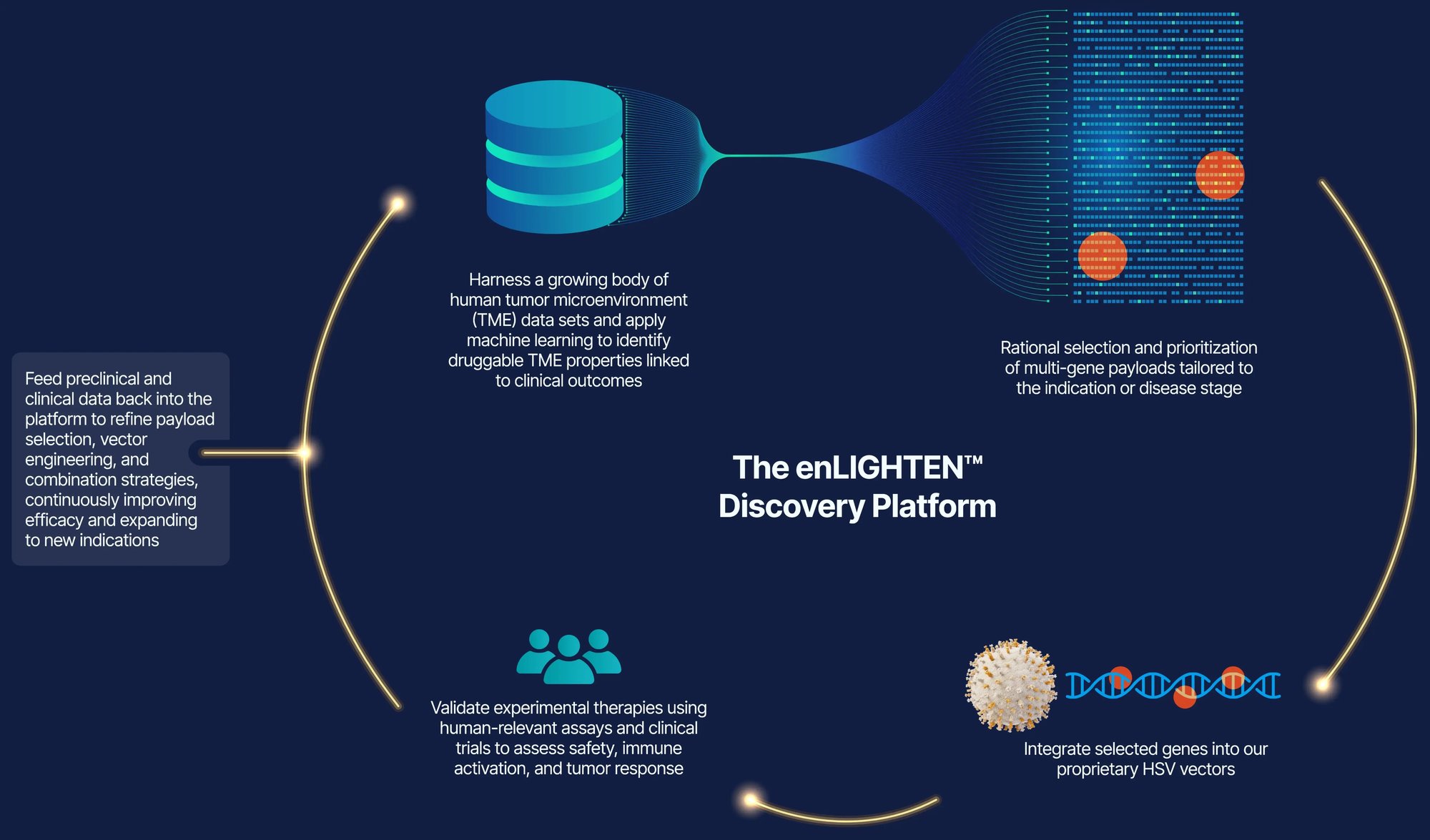
Human biological data and AI-driven analytics enable the design of novel HSV-based gene constructs tailored to specific indications and disease stages for enhanced precision and efficacy.
Aglatimagene
Aglatimagene besadenovec (aglatimagene or CAN-2409)
Aglatimagene besadenovec (aglatimagene or CAN-2409) is an adenoviral replication-defective engineered gene construct, encoding the thymidine kinase gene derived from herpes simplex virus (HSV). Aglatimagene is injected directly into the tumor or target tissue. Our method of localized injection into tissue is akin to the standard approach for immunization. Localized injections are believed to minimize the chance of development of anti-drug antibodies and systemic toxicities associated with systemic administration. The adenoviral construct serves as a vector to transport the HSV-thymidine kinase gene into tumor cells at the site of injection.
These tumor cells can then express HSV-thymidine kinase, which converts generic, FDA-approved anti-herpes drugs, such as ganciclovir, acyclovir and valacyclovir (used as prodrugs which are widely available, inexpensive and generally well-tolerated) into a toxic nucleotide analogue, which blocks DNA synthesis in dividing cells. Cells exposed to the toxic nucleotide analogue in the tumor microenvironment have been observed to undergo immunogenic cell death. At the same time, the adenoviral serotype 5 capsid protein elicits a strong pro-inflammatory signal in the tumor microenvironment. This creates optimal conditions to induce a specific CD8+ T cell mediated response against the injected tumor and uninjected distant metastases for broad and systemic anti-tumor activity.
Because of its versatility, aglatimagene has the potential to treat a wide range of solid tumors. Monotherapy activity as well as combination activity with standard of care radiotherapy, surgery, chemotherapy, androgen deprivation therapy, and immune checkpoint inhibitors have previously been shown in several preclinical and clinical settings, supporting the potential for combination with other therapeutic strategies. Furthermore, aglatimagene has demonstrated a favorable tolerability profile; more than 1,000 patients have been dosed to date in a range of solid tumor indications. Currently, Candel is evaluating the effects of treatment with aglatimagene in patients with non-small cell lung cancer and localized, non-metastatic prostate cancer.
Learn more about aglatimagene (CAN-2409) from our R&D day presentations.
Demonstrated platform capabilities:
- Localized/intratumoral delivery minimizes systemic toxicity
- Potential compatibility with existing standards of care including radiotherapy, surgery, chemotherapy, androgen deprivation therapy, and immune checkpoint inhibitors
- Favorable tolerability profile shown across 1,000+ dosed patients
- Promising applicability across multiple solid tumor types
How it works
Viral Vector Composition
Adenoviral construct encoding the thymidine kinase (TK) gene from HSV.
Intratumoral Transduction & Expression

Adenovirus delivers HSV TK gene to tumor cells. Tumor cells start expressing HSV TK.
Enzymatic Prodrug Activation

Anti-herpes drugs are converted by HSV TK into a toxic nucleotide analog.
Immunogenic Cell Death & Systemic Immune Response

Modified drugs blocks DNA synthesis in dividing tumor cells, leading to tumor cell death. Adenovirus capsid proteins attract immune cells to the tumor microenvironment. Activated immune cells then attack distant metastases.
The products described on this website are investigational products. They have not been reviewed or approved by the U.S. Food and Drug Administration (FDA), and safety and effectiveness has not been established.
Linoserpaturev
Linoserpaturev (CAN-3110)
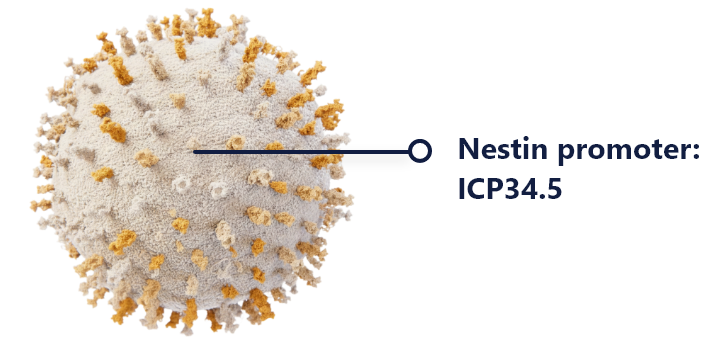
Linoserpaturev is a replication-competent herpes simplex virus (HSV) engineered to enhance selective killing of cancer cells while sparing healthy neighboring cells. Linoserpaturev is engineered for selective replication by placing ICP34.5, the key regulator of HSV replication, under the Nestin promoter. Nestin has been shown to be highly expressed in high-grade glioma cells, but is absent in healthy adult brain cells, which may explain why dose-limiting toxicity was not observed in a study of a single injection of linoserpaturev into the brain tumor in patients with recurrent high-grade glioma.
Nestin expression has also been detected in triple negative breast cancer, sarcoma, melanoma, and other aggressive tumors, which broadens the possibility of expanding the use of linoserpaturev into other indications, creating a future pipeline-in-a-product. The ICP34.5 gene is typically deleted in other oncolytic viruses, which may result in poor replication ability and a limited capacity to induce durable anti-tumor immunity. Currently, the effects of multiple doses of linoserpaturev are being evaluated in patients with recurrent high-grade glioma in an ongoing investigator-sponsored phase 1b clinical trial.
Learn more about linoserpaturev (CAN-3110) from our R&D day presentations.
Demonstrated platform capabilities:
- Tumor-selective replication preserves healthy tissue
- Retains ICP34.5 gene for robust replication (deleted in other oncolytic viruses)
- Dose-limiting toxicity not observed in study of recurrent high-grade glioma patients
- Nestin expression in multiple aggressive tumors broadens application potential
How it works
Viral Vector Composition
Herpes virus construct encoding the ICP34.5 gene controlling HSV replication, placed under the control of the Nestin promoter.
Intratumoral Transduction & Expression

High expression of nestin is observed in aggressive tumor cells but absent in healthy cells. Nestin activates ICP34.5-driven HSV replication in tumor cells.
Enzymatic Prodrug Activation

Viral lysis of tumor cells releases tumor antigens that are then recognized by immune cells. Activated immune cells can attack the tumor and distant metasteses.
Featured science
Image is a three-dimensional rendering of a brain MRI from a patient with glioblastoma, who participated in a clinical trial, evaluating an oncolytic viral immunotherapy, linoserpaturev (CAN-3110), and testing feasibility of serial biopsy acquisition.
The color scale represents MRI intensity. The semi-transparent red region represents the tumor and the yellow region represents the necrotic tumor core. The sites of treatment are denoted by green spheres and biopsy sites by solid red cylinders. Ling et al. (Sci Transl Med 2025;17:eadv2881) demonstrated that serial sampling of glioblastoma tumors was feasible and safe for two trial participants. Multiomics analyses on these biopsies uncovered viral immunotherapy effects that would not be evaluable by MRI. A Focus article by PR Lowenstein (Sci Transl Med 2025;17:eadz1286) discusses the value of this unique view into the tumor.
The products described on this website are investigational products. They have not been reviewed or approved by the U.S. Food and Drug Administration (FDA), and safety and effectiveness has not been established.
The enLIGHTEN™ Discovery Platform
enLIGHTEN™ Discovery Platform
The complexity of the tumor microenvironment and the diversity of the tumor response to existing treatments requires a multimodal and tailored approach to the discovery and development of new therapeutics. Candel Therapeutics’ enLIGHTEN™ Discovery Platform is a systematic, AI-driven platform based on human biology and advanced analytics to create new herpes simplex virus (HSV)-based gene constructs to modulate the tumor microenvironment in specific solid tumors by design. Built on our suite of proprietary HSV vectors and a bespoke data-driven approach for the selection of multi-gene viral payloads, the enLIGHTEN™ Discovery Platform is uniquely positioned to combine, in a single therapeutic, the tunable features of viral immunotherapies with personalized modulation of tumor biological properties.
The enLIGHTEN™ Discovery Platform deconvolutes the complexity of the tumor microenvironment to identify druggable properties that correlate with clinical outcomes. These discoveries are translated into optimized multi-gene payloads of tumor modulators with the aim of creating a novel class of viral immunotherapy candidates that are tailored for specific indications, disease stage, and rationally designed therapeutic combinations. Recent data demonstrate that AI-designed viral immunotherapies achieved 60% tumor growth suppression and robust immune activation in breast cancer models, confirming the platform’s potential to accelerate precision immunotherapy design.